
Prolongation Costs: Costain v Haswell and How It Reads in Australia
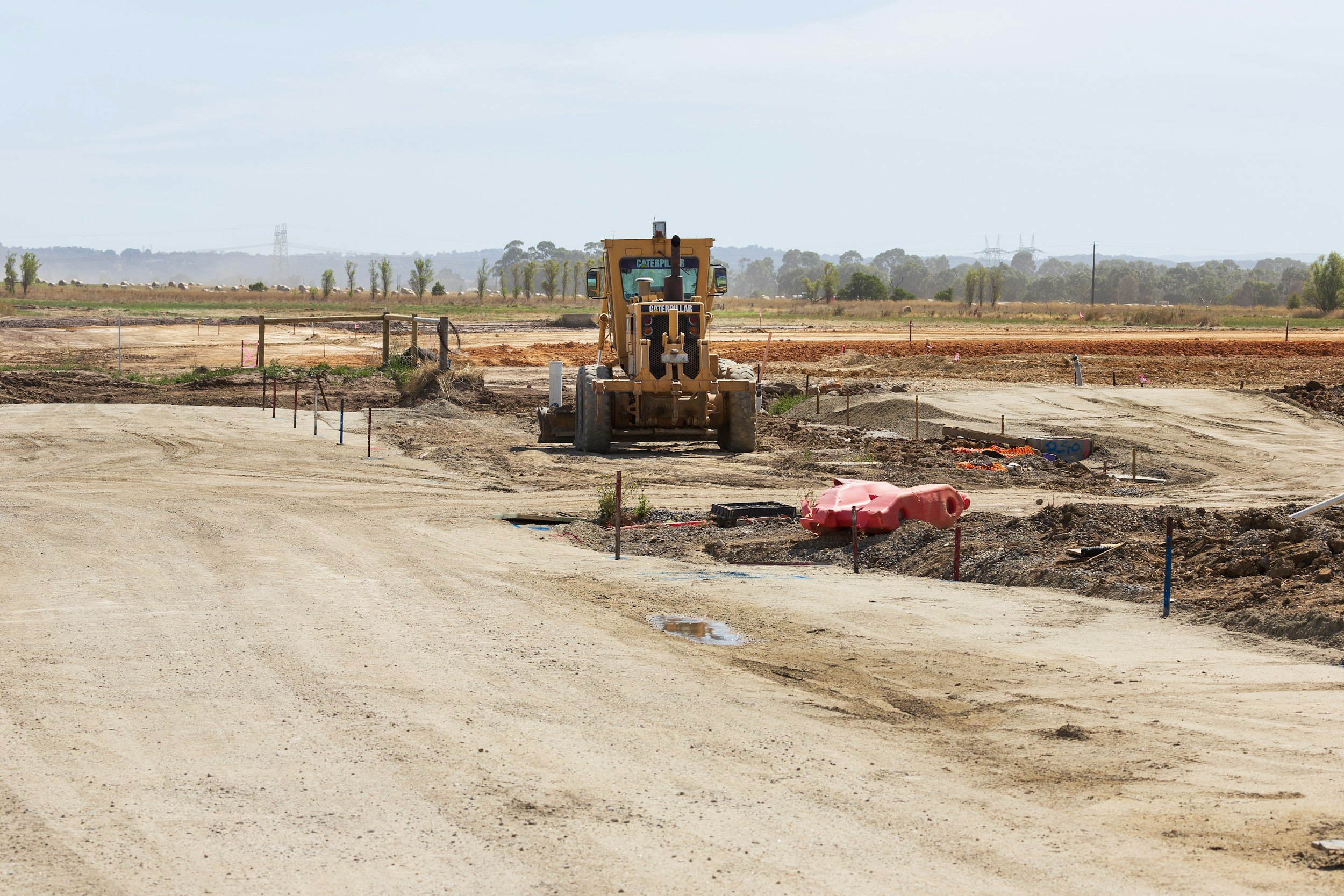
Prolongation claims (the contractor's claim for additional time-related site running costs caused by delay to completion) are among the most frequently advanced and least understood heads of claim in construction disputes.
Judicial guidance on their valuation is surprisingly thin, largely because such claims are usually resolved by adjudication or negotiated settlement rather than litigated to judgment. That scarcity is why Costain Ltd v Charles Haswell & Partners Ltd [2009] EWHC 3140 (TCC) still attracts attention more than fifteen years on, and why Australian practitioners should handle its reasoning with care.
The orthodox position
Valuation orthodoxy rests on a single distinction: time-related versus volume-related cost. Site overheads, such as supervision, site accommodation and key plant retained for the duration of the works e.g., cranage are time-related because they are incurred by the passage of time, not by the volume of work performed. Where a critical delay impacts completion, the contractor recovers the actual additional time-related cost over the delay period, proved by real records (payroll, invoices, plant hire dockets etc.) rather than a "rough and ready" average drawn from the contract preliminaries. That was the approach in Ascon Contracting v Alfred McAlpine, where Judge Hicks QC rejected a preliminaries-based average, and it is consistent with Hudson and Keating. The orthodox test asks one question only: what loss did the delaying event generate?
What Costain added
Costain concerned a ten-building industrial site at Lostock, of which only two structures were delayed by allegedly negligent foundation design. Costain nevertheless claimed site-wide overheads. The court held the claim failed for want of proof: a contractor seeking general site overheads must establish that the delaying event affected all activities across the site, not merely those immediately dependent on it. Because no evidence linked the two delayed buildings to progress on the other eight, the whole overhead claim failed, even though the experts had agreed both the extent of delay to the affected buildings and the weekly overhead rate. The court added that early-stage delay might be "later mitigated, neutralised or even exacerbated by later events", so a claimant must also show that the earlier delay translated into delay to the completion date.
Why commentators objected
The principal criticism is that Costain combines causation of the delay with causation of the cost. A site manager, a site office and a tower crane are on site as a function of time elapsing, not as a function of which particular activities happen to be under way. Once critical delay to completion is proved, the resources retained because of that extended duration should be recoverable in full, regardless of if unaffected work continued elsewhere. Taken to its logical end, Costain would require a claimant to prove that a boundary fence beside a delayed access road was itself delayed before recovering any part of its site-wide overheads: a result fairly described as illogical, since that work has no bearing on why the site team stayed longer. The better view may be that Costain turned on its facts: the overheads claimed were an indistinguishable mixture of time-related and volume-related cost, so no reliable time-related figure could be isolated.
How it reads in Australia
No Australian decision has adopted the Costain site-wide test, and it is unlikely to be treated here as displacing the actual-cost methodology in Ascon. But the instinct underlying it, hard proof of causation and of loss, is in line with the Australian authorities.
White Constructions Pty Ltd v PBS Holdings Pty Ltd [2019] NSWSC 1166 is the sharpest example. Hammerschlag J declined to adopt either party's programming methodology, rejected the notion that a method's presence in the SCL Delay and Disruption Protocol makes it appropriate, and returned to first principles: the onus lay on the claimant to prove that the project was in fact delayed by the events relied on and that loss followed.
It failed to do so. Earlier, in Alstom Ltd v Yokogawa Australia Pty Ltd (No 7) [2012] SASC 49, Bleby J gave greater weight to Protocol-recognised methods, but the same lesson emerged from a 461-page judgment: entitlement stands or falls on the contract's own delay-cost mechanism and on evidence, and where the contract prescribes the remedy, common law damages may be excluded altogether. The threshold question in Australia is therefore contractual before it is evidentiary: is there a right to delay costs at all?
The practical convergence is this. Australian courts will not assume that an extension of time determination proves loss, and they will not accept a site-wide overhead figure simply because a critical delay is established somewhere on site. That is not the Costain rule, but in an evidentiary sense it produces much the same discipline.
Three points for claim preparation
Prove the loss, not just the entitlement. In a damages context, the claimant must show both delay to completion and cost actually incurred; an extension of time determination will rarely carry that burden on its own.
Separate time-related from volume-related cost at the outset. Claims that blend the two invite exactly the evidential difficulty that proved fatal in Costain.
Scope the claim to the evidence. Where only discrete parts of a multi-element site are demonstrably affected, confining the overhead claim to those elements is often better strategy than exposing the whole claim on an all-or-nothing basis.
A word in Costain's defence
Costain should not be dismissed as an aberration. In practice a delaying event rarely affects every activity on site at once; a multi-structure project usually keeps progressing on unaffected fronts. It is not unreasonable to ask a contractor to demonstrate the extent to which its site-wide resources were genuinely consumed by the event relied upon. The point sharpens where concurrent delay is in play: where employer-risk events and contractor culpable delay run in parallel, insisting on a clear causal link between event and overhead discourages claims that quietly absorb the cost of the contractor's own delay into an undifferentiated site-wide figure.
Costain occupies an unusual position: a rare instance of detailed judicial engagement with valuation principles that sits awkwardly with orthodox practice. Treat its site-wide overhead reasoning with caution. Its broader message, that prolongation losses must be properly proved and time-related costs clearly distinguished from volume-related ones, is sound, and on the Australian authorities it is unarguable.
At Accura Consulting, our team of experts work with clients to create a tailored solution to problems. If you have an issue and want expert support, get in touch.
Back to News and Insights
Related News and
Insights from Accura


When you receive a rectification estimate, from your own expert or the other side's, there are three key questions quantum expert witness, Paul McArd advises you ask.