
Global claims complexity is not a substitute for analysis
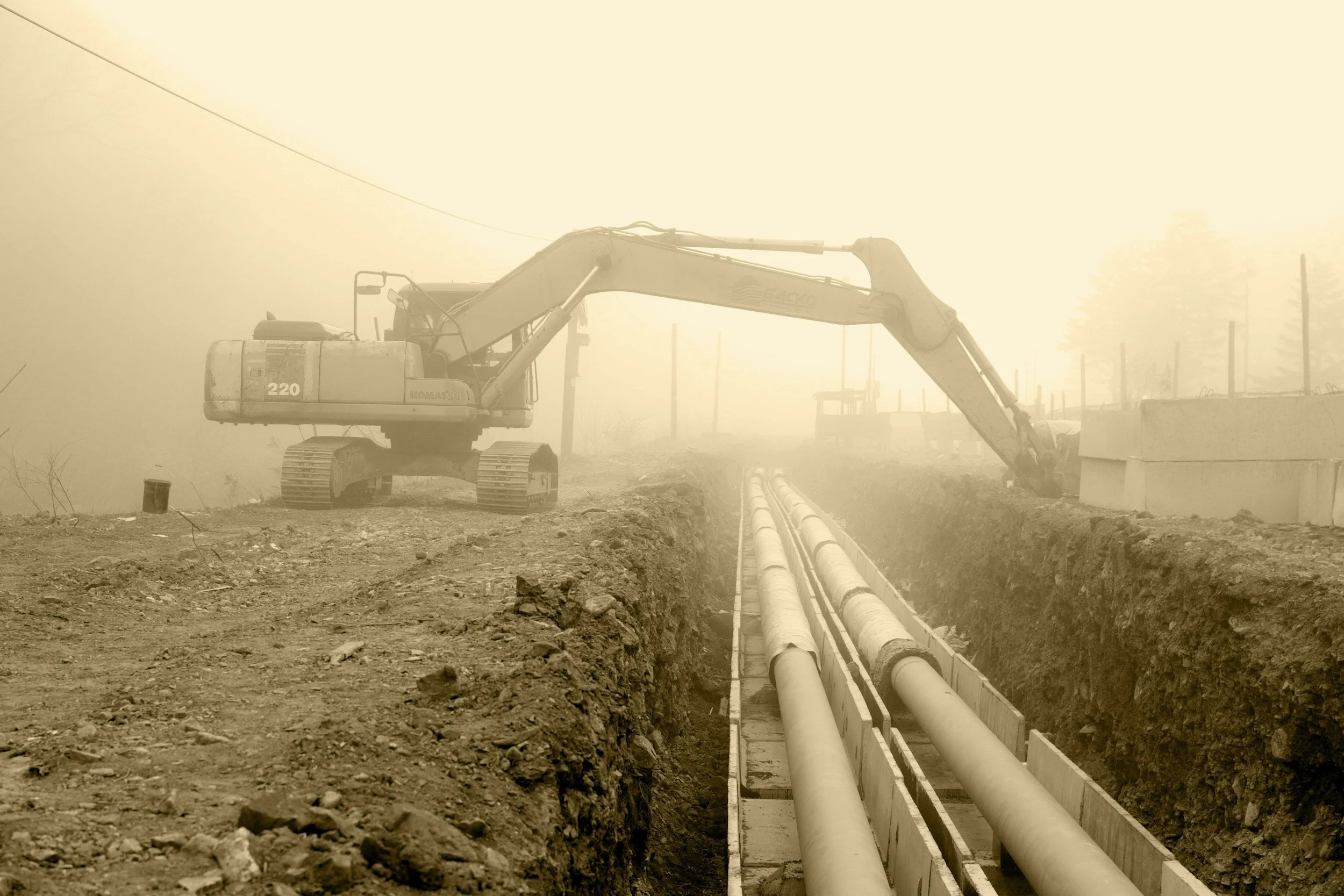
The decision in DM Drainage & Constructions Pty Ltd v Karara Mining Ltd [2014] WASC 170 provides clear guidance on how Australian courts approach global and total cost style claims and why many such claims fail at an early stage.
For expert Quantity Surveyors, the judgment is important not because it introduces new principles, but because it explains in detail what a global claim is, why it is logically weak, and what must be done if such a claim is to proceed.
Background to the dispute
DM Civil brought claims against Karara Mining for additional costs said to arise from directions, changes and delays on a major mining project. The claims were pleaded by reference to total actual costs compared with amounts paid, rather than by identifying specific costs flowing from specific alleged breaches.
Karara Mining applied to strike out parts of the claim on the basis that the pleading amounted to an impermissible global or total cost claim.
How the Court classified the claims
The Court began by setting out orthodox definitions of global claims, total cost claims and modified total cost claims at paragraphs [36] to [38]. The Court then made a clear finding at paragraph [40] that DM Civil’s claims were global claims and modified total cost claims.
This classification was not incidental. It was central to the Court’s reasoning and framed the analysis that followed
The logical weakness of global claims
At paragraphs [54] to [59], Beech J adopted and applied the reasoning of Byrne J in John Holland Construction and Engineering Pty Ltd v Kvaerner RJ Brown Pty Ltd. The Court explained that the essential difficulty with a global or total cost claim is that it assumes that the respondent’s breaches caused all of the cost overrun.
The Court stated that unless other potential causes of loss are excluded, the inference of causation cannot be drawn. This is not a discretionary matter. It is a matter of logic. If loss may have been caused by factors for which the respondent is not responsible, a global claim cannot succeed unless those factors are addressed
The need to exclude non defendant causes
The Court made clear that a claimant advancing a global claim must establish that there were no operative causes of loss other than matters for which the defendant was responsible. This requirement appears at paragraphs [56] to [59].
The Court rejected the notion that a claimant can simply rely on the scale or complexity of a project to avoid this obligation. If non defendant causes exist, they must be excluded or dealt with expressly. Failure to do so renders the claim defective
Disentanglement and pleading requirements
At paragraphs [67] to [75], the Court addressed the argument that it was impracticable to disentangle loss caused by different events. The Court accepted that a global claim may be permissible where disentanglement is genuinely impracticable. However, it held that this is not something that can be assumed.
The claimant must plead why disentanglement is impracticable. Simply asserting complexity is not enough. The pleading must explain why it is not possible to identify which parts of the loss relate to which alleged causes
The Court ordered that the claim be re pleaded to address these deficiencies.
What this means for expert Quantity Surveyors
The judgment provides practical guidance for expert Quantity Surveyors instructed on claimant matters.
First, identifying a claim as global does not relieve the expert of the obligation to analyse causation. Experts must be careful not to assume that because multiple directions or delays occurred, all cost overruns are compensable.
Second, experts must consider whether non defendant causes of loss exist and whether they can be excluded. Ignoring those causes is not neutral. It undermines the logic of the claim.
Third, where disentanglement is said to be impracticable, the expert should be able to explain why. Complexity alone is not a justification.
Finally, presenting large volumes of cost data without explaining how those costs are causally linked to alleged breaches does not assist the court. The role of the expert is to analyse and explain, not to aggregate.
DM Drainage v Karara confirms that Australian courts remain sceptical of global claims that rely on complexity and volume rather than analysis. The case reinforces that proof of causation remains central and that global claims will fail where non defendant causes are not excluded or addressed.
For expert Quantity Surveyors, the message is clear. Complexity is not a substitute for analysis. Volume is not a substitute for reasoning. Expert evidence must expose the analytical pathway between breach and loss if it is to withstand scrutiny.
At Accura Consulting, our team of experts work with clients to create a tailored solution to problems. If you have an issue and want expert support, get in touch.
Back to News and Insights
Related News and
Insights from Accura



Examining concurrent delay in construction contracts with guidance on delay expert witness evidence, forensic delay analysis and managing concurrent delay disputes in Australia.