
Why Aggregated Drawing Deficiency Claims Fail Before Trial - Exploring Built Environs v Perth Airport
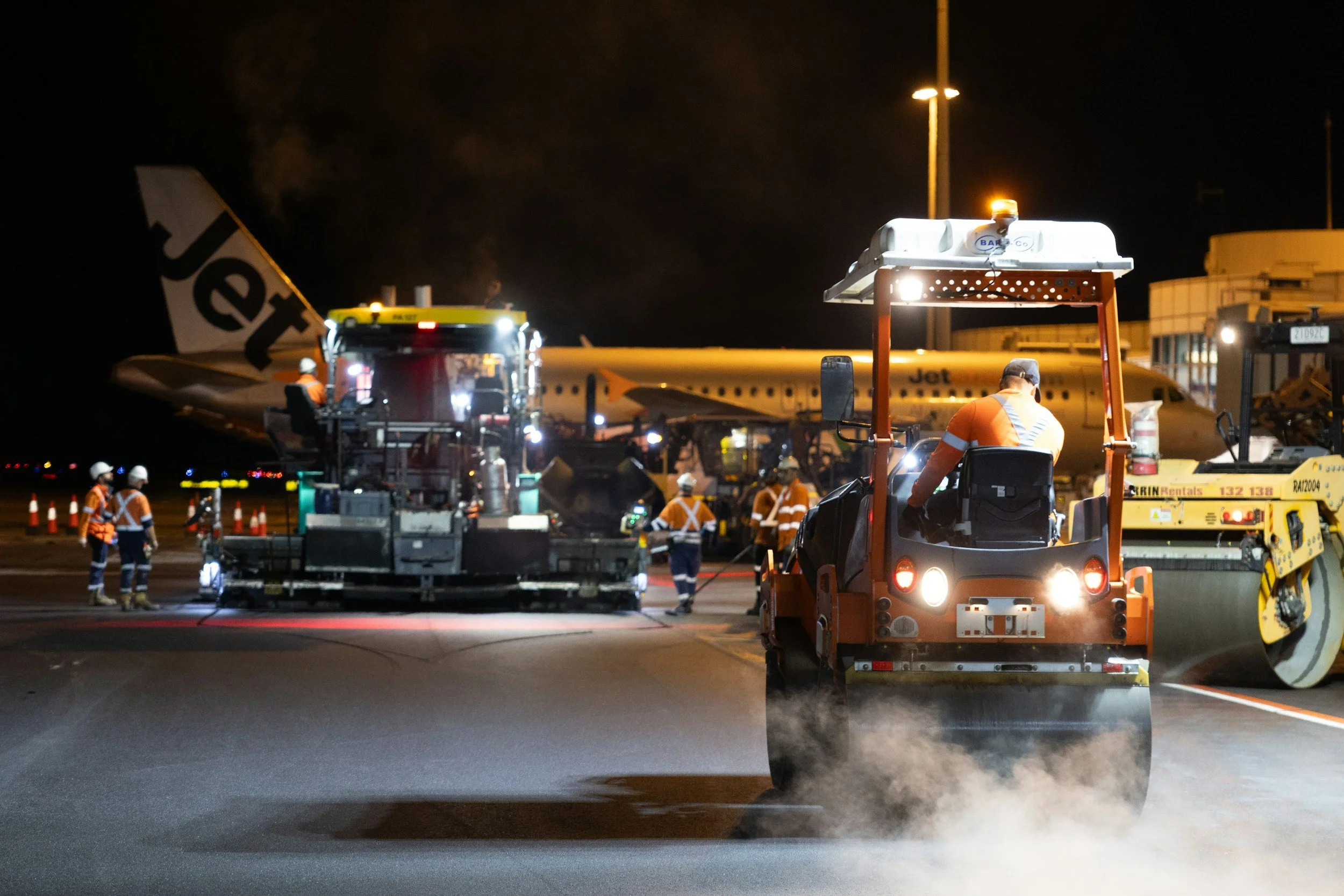
The decision in Built Environs WA Pty Ltd v Perth Airport Pty Ltd is a clear modern illustration of why drawing deficiency and disruption claims often fail before they ever reach trial.
The contractor alleged widespread deficiencies in drawings and specifications and claimed more than $13 million in preliminaries costs. But the court struck out the relevant damages paragraphs as embarrassing, because the claim did not articulate any intelligible causal pathway between particular alleged drawing defects and particular financial consequences.
The claim: general deficiencies, project wide consequences, aggregated loss
The contractor pleaded “General Drawing Deficiencies”, asserting that deficient drawings required extensive additional work, including thousands of RFIs, sketches, variations, delay notices and EOT claims.
The damages plea then asserted preliminaries costs quantified down to the cent. However, as Martin J observed, “precisely how that position is reached is not explained”. The schedule did not answer the question either.
The pleading therefore presented as an aggregated loss claim said to arise from a broad category of deficiency, without any attempt to connect specific defects to specific additional work or cost consequences.
The global claim problem and the refusal to commit
Martin J identified the deeper structural issue. As framed, the claim manifested “almost certainly” as a global or modified total cost claim, because nothing attempted to draw causal links between particular drawing deficiencies and particular cost consequences.
Where a party advances such a claim, the associated burdens must be confronted, including the exclusion of alternative causes. Without excluding other operative causes, the inference of causation cannot be drawn.
Yet even at the hearing, the contractor would not commit to whether it was advancing a modified total cost claim. Martin J observed that the plaintiff would not “nail its colours to the mast”.
His Honour rejected that forensic ambiguity:
“The continuing uncertainty on these core questions has endured long enough. It is no longer tolerable.”
Outcome: struck out as embarrassing
By March 2019, the court concluded that the relevant damages paragraphs must be struck out as embarrassing. The defendant was relieved of discovery obligations in respect of those claims.
This was not a final determination of the merits, but it was a severe interlocutory consequence. The claim could not proceed in its pleaded form.
What should have been done
Given the scale of the claim, the contractor needed to do more than plead general drawing deficiencies and assert a single aggregated preliminaries figure.
If the claim was not to be treated as a rolled up global case, it required conventional causal particularisation. That meant:
Identifying the specific drawing defects relied upon, rather than pleading deficiencies at a general level.
Demonstrating the additional work generated by each defect, whether by rework, redesign, sequencing disruption, or discrete variations attributable to that drawing issue.
Quantifying the cost consequences flowing from that additional work, by showing how particular preliminaries or delay costs were said to arise from those defects, rather than from project wide disruption in the abstract.
Absent that disciplined linkage between defect, consequence and cost, the pleading remained structurally global in substance and could not proceed.
Key Takeaway
The central lesson of Built Environs is straightforward. Drawing deficiency and disruption claims cannot be advanced as an aggregated loss narrative.
A contractor cannot plead “general deficiencies”, point to project wide disruption metrics, and then assert a global preliminaries sum quantified to the cent. The court will require a pleaded causal explanation.
Unless a claimant is prepared to run a properly articulated global or modified total cost case, with the accompanying obligation to exclude alternative causes, it must particularise causation conventionally: defect by defect, additional work by additional work, and cost consequence by cost consequence.
At Accura Consulting, our team of experts work with clients to create a tailored solution to problems. If you have an issue and want expert support, get in touch.
Back to News and Insights
Related News and
Insights from Accura




Andrew McKenna examines how courts assess extension of time claims, exploring prospective versus retrospective delay analysis, superintendent independence and critical path evidence.